

Early childhood education lays the foundation for a child’s academic confidence, emotional intelligence, and lifelong curiosity. Among the most respected progressive models in the United States is the Bank Street College of Education, widely recognized for shaping what we now call the Bank Street approach in early childhood education.
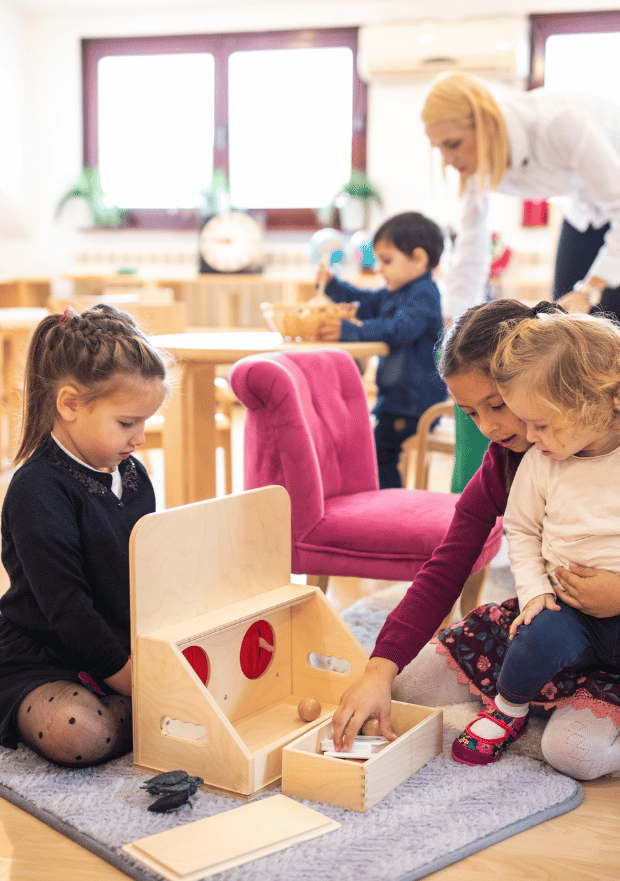
The Bank Street curriculum for early childhood focuses on the whole child intellectual, emotional, social, and physical development through meaningful, hands-on learning experiences. Instead of rote memorization, children explore, question, build, collaborate, and reflect. This method creates not just good students, but lifelong learners.
In this guide, we’ll explore how the philosophy works, why it’s effective, and why programs like Bank Street Early Learning Curriculum continue to inspire educators and families seeking a balanced, child-centered model.
What Is the Bank Street Curriculum for Early Childhood?
The bank street curriculum for early childhood is rooted in developmental-interaction theory. It views children as active participants in their learning journey. Education is not something delivered to them—it is something they construct through experience.
The bank street approach in early childhood education emphasizes:
- Learning through play and exploration
- Real-world connections
- Emotional and social growth alongside academics
- Teacher-guided discovery rather than rigid instruction
- Integrated subjects rather than isolated lessons
The Core Philosophy: Education for the Whole Child
The reason the Bank Street curriculum for early childhood builds lifelong learners is simple: it nurtures more than academics.
1. Intellectual Development Through Active Learning
Children are encouraged to ask questions, test ideas, and reflect on outcomes. Instead of being passive recipients of information, they become thinkers and problem-solvers.
2. Emotional Intelligence and Self-Regulation
The bank street approach in early childhood education supports emotional growth. Children learn to express feelings, resolve conflicts, and develop empathy. These skills are essential not only for school success but for life success.
3. Social Learning Through Collaboration
Group discussions, shared projects, and peer interactions help children understand different perspectives. They learn cooperation, leadership, and communication skills early on.
4. Physical and Creative Expression
Movement, art, music, and dramatic play are not “extras.” They are core components of the bank street curriculum for early childhood, helping children build confidence and creativity.
How the Bank Street Approach Builds Lifelong Learners
Encourages Curiosity Over Compliance
Traditional education models sometimes prioritize quiet classrooms and standardized outcomes. In contrast, the bank street approach in early childhood education values curiosity. When children are encouraged to explore their interests, learning becomes intrinsically motivated.
Develops Critical Thinking Skills
Problem-solving activities—like building structures, conducting simple experiments, or discussing stories—help children analyze, predict, and evaluate. These foundational thinking skills extend far beyond early education.
Builds Strong Teacher-Student Relationships
Teachers act as facilitators and observers. They understand each child’s developmental stage and tailor learning experiences accordingly. This personalized approach strengthens confidence and engagement.
Connects Learning to Real Life
Children might study community helpers by visiting local services, explore nature in outdoor settings, or connect math to shopping role-play. Real-world integration makes learning meaningful and memorable.
Classroom in Action: What It Looks Like
In a classroom using the Bank Street curriculum for early childhood, you’ll see:
- Learning centers filled with blocks, books, art materials, and sensory tools
- Children working in small groups
- Teachers guiding discussions rather than lecturing
- Projects that integrate multiple subjects
- Reflection time where children talk about what they learned
Why Choose Bank Street Early Learning Curriculum?
Choosing the right curriculum impacts a child’s long-term development. Here’s why many schools and families prefer the Bank Street Early Learning curriculum:
Child-Centered Philosophy
Every child develops at their own pace. This curriculum respects developmental readiness rather than enforcing rigid benchmarks.
Balanced Academic & Social Growth
While literacy and numeracy skills are important, equal emphasis is placed on social-emotional development.
Proven Educational Legacy
The framework behind the Bank Street approach in early childhood education has influenced progressive education models for decades.
Encourages Independence
Children learn how to make choices, take responsibility, and reflect on outcomes—skills that support independence later in life.
Adaptable Across Diverse Settings
The Bank Street curriculum for early childhood can be implemented in private schools, public schools, early learning centers, and community programs.
Long-Term Benefits for Children
Children who experience the Bank Street approach in early childhood education often develop:
- Stronger communication skills
- Greater adaptability
- Higher emotional intelligence
- Confidence in problem-solving
- Love of learning
Because they are taught how to learn, not just what to learn they transition more successfully into elementary school and beyond.
How Schools Can Successfully Implement the Curriculum
Implementing the Bank Street curriculum for early childhood requires:
- Trained educators who understand child development
- Flexible classroom environments
- Ongoing observation and documentation
- Family engagement and communication
- Continuous professional development
When these elements align, the program becomes transformative rather than simply instructional.
Frequently Asked Questions (FAQ)
1. What makes the bank street curriculum for early childhood different?
The biggest difference is its whole-child focus. It integrates academics, emotional growth, and social learning through hands-on experiences.
2. Is the bank street approach in early childhood education research-based?
Yes. It is grounded in developmental-interaction theory and decades of educational practice.
3. Does this curriculum prepare children for academic standards?
Absolutely. While it avoids rigid drilling, children develop literacy, math, and critical thinking skills naturally through experiential learning.
4. Can the Bank street early Learning curriculum be adapted for different age groups?
Yes. The framework is flexible and developmentally responsive across preschool and early elementary levels.
5. Is it suitable for diverse learners?
Yes. Because it focuses on individual development and observation-based planning, it supports children with varying learning styles.
Final Thoughts
The bank street curriculum for early childhood is more than a teaching method—it’s a philosophy that respects childhood. By blending academics with emotional intelligence, social awareness, and hands-on exploration, it builds confident, curious learners.